Houston, we have a problem. Most B2B founders and decision-makers treat LinkedIn like a digital resume. They fill in the fields, add a logo, and maybe post something when they remember. Then they wonder why competitors are closing deals while they're not getting a single inbound call.
Your personal LinkedIn profile directly impacts your company's revenue. While you're figuring out how to "increase engagement," your competition is building personal brands that open doors closed to you.
The problem nobody admits
People don't buy from brands. They buy from people they trust.
| 73% of B2B buyers trust thought leadership content more than traditional marketing materials when evaluating a company's competencies.
Trust isn't a nice-to-have anymore. It's the deciding factor. Let's look at what that means in practice.
Your company page has 2.000 followers. Great. But how many of those people really decide whether to work with you?
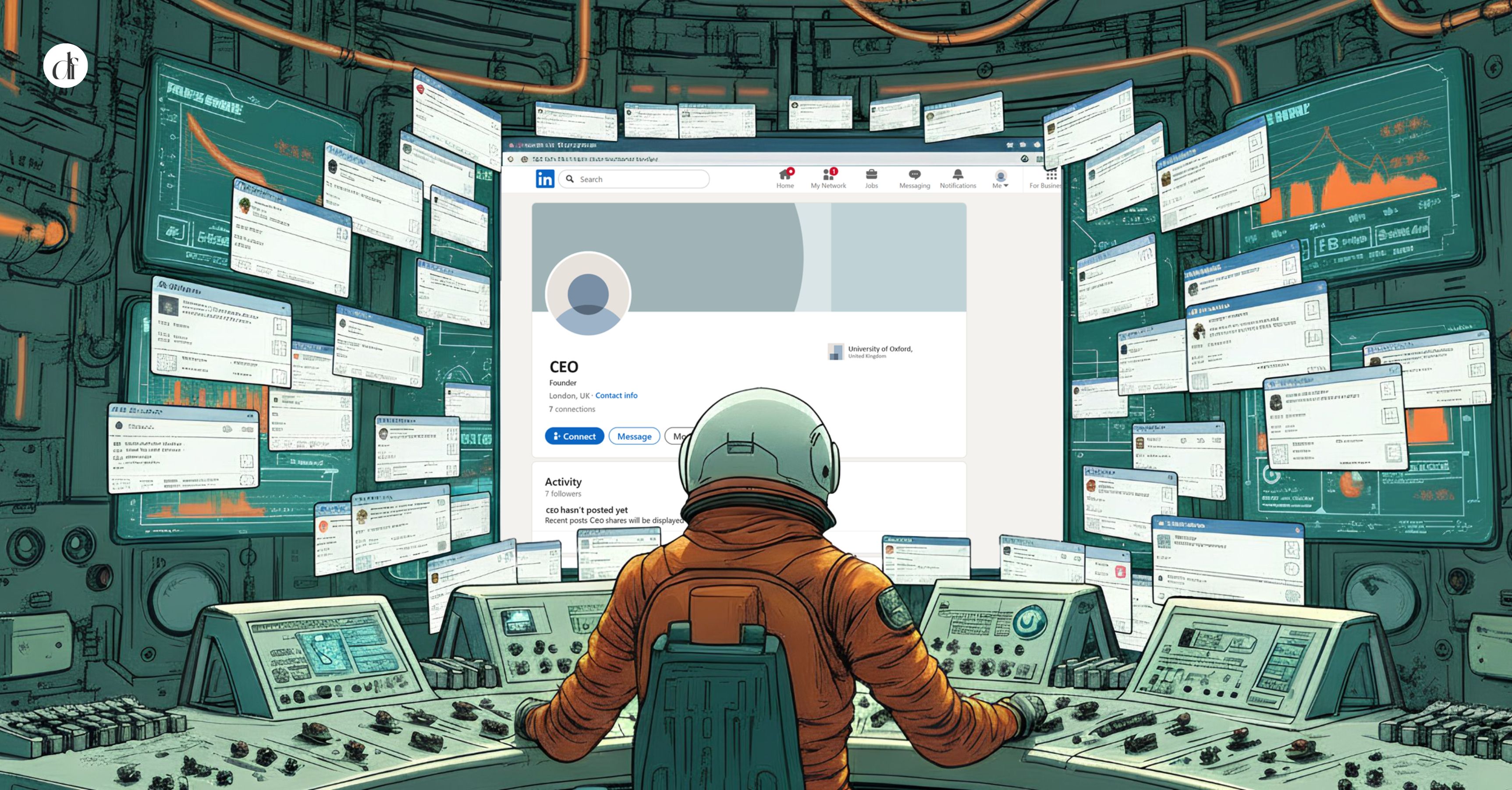
Your CEO, CTO, and Head of Sales - the people who make decisions in your company - have LinkedIn profiles that look like they were created in 2014 and never refreshed. No activity. No thought leadership. No relevant content.
The result is very obvious. Zero credibility when someone decides to research you before a meeting.
Do you know what your client does before contacting you? They search for you on LinkedIn. They look at what you write. Whether you understand their industry. Whether you talk about their problems. Whether you even exist.
If the answer isn't obvious within 30 seconds of scrolling, you're not even in the game.
People trust people, not logos
Employee-generated content receives 8x more engagement than branded content. That's not a coincidence. That's how trust works in 2025.
LinkedIn's algorithm favors personal profiles over company pages. Your employees have an average of 10x more connections than your company has followers. That means your team has access to a wider, more relevant audience than your brand can reach alone.
But that means nothing if:
Your leadership team isn't posting anything relevant
They don't have a clear strategy about what to say and how to say it
They're not positioned as thought leaders in their industry
While you're posting corporate press releases from your company page, your competition has a CEO writing about real problems in the industry. Sharing insights. Building trust before any sales conversation begins.
More than half of B2B decision-makers use thought leadership to evaluate organizations they're considering engaging. If you don't have thought leadership, you're not even being considered.
What works (and nobody tells you)
Here's what we see when we run LinkedIn strategies for our clients:
#1 Consistency beats frequency. You don't need 10 posts a day. Who even has time and the capacity for such a thing? You need a relevant, consistent presence that shows you understand your target audience's problems.
#2 Engagement is currency. Content that provokes conversation, that challenges, that asks controversial questions - that's what the algorithm rewards. LinkedIn in 2025 isn't a place for "motivational quotes" and generic advice. The platform rewards authenticity and depth.
#3 Personal branding isn't about you. It's about your clients. About their problems. About how your expertise solves real challenges. People don't follow people who talk about themselves. They follow people who help them think differently.
Most importantly:
The vast majority of B2B buyers start their purchasing journey with a mental shortlist of brands they already know and trust. If you're not on that list before they start actively looking for solutions, getting in becomes exponentially harder. Your chances drop dramatically once the buying process begins.
How do you get on that list? Become present before they even start looking for a solution. Build credibility. Thought leadership.

The problem with company pages (and why you need people)
Company pages aren't useless. On the contrary, every serious brand should have a page and share valuable content with their audience. But they don't build trust.
Companies that post at least once a week see 2x lift in engagement with their content. But employee advocacy takes it to a completely different level:
People share employee-generated content
24x more oftenthan branded contentLeads developed through employee social marketing convert
7x more frequentlythan other leadsCompanies with successful employee advocacy programs are
58% more likely to attract top talent
This means that your team isn't just an internal resource. They're your most powerful marketing channel.
But only if they know what to do. If they have a strategy. If they're trained on how to build personal brands that drive business.
What this means for you
Maybe you're thinking: "We're focused on the product. We don't have time for a LinkedIn strategy."
We get it. But your competition is finding that time. And while you "don't have time," they're building relationships with people who could be your clients.
Thought leadership content changes buying behavior. When decision-makers encounter genuinely valuable insights, they start researching products and services they hadn't previously considered. They become more receptive to outreach from companies they perceive as thought leaders. They're even willing to pay premium prices for organizations that consistently demonstrate expertise through quality content.
Those are deals you're losing because you have no presence. That's money you're leaving on the table.
LinkedIn isn't optional. It's an offline conversation happening online. And if you're not part of that conversation, you're losing.
What we’ve seen firsthand
Our Sales Manager started posting consistently on LinkedIn six months ago. Before that, she was grinding through cold outreach - 100 messages a week, maybe 3 meetings a month if she was lucky. Standard B2B sales hell.
Then she shifted her approach. Instead of chasing prospects, she started sharing insights about sales challenges, GTM strategies, and what works in B2B.
Within three months, she was getting 15 inbound meeting requests per week. Not from random tire-kickers. From qualified prospects who were already convinced of her expertise.
Six new clients in 10 days. All inbound. All because they trusted her before the first conversation even started.
She's not the exception. We've seen this pattern repeat with our clients. A founder who posts consistently about their industry's problems suddenly gets invited to speak at conferences. A CTO who shares technical insights finds VCs reaching out directly. A marketing lead who documents their company's growth journey attracts partnership opportunities.
None of this happened by accident. It happened because of a system and strategy for consistent visibility and trust. Personal brands became sales tools, and thought leadership turned into a pipeline.

The LinkedIn window is closing
Every platform has its golden era. Instagram's was 2014-2018. Facebook's is fading. LinkedIn's is now.
In the U.S., companies are already rewarding employees with bonuses for engagement growth. In Europe, most B2B deal flow now begins on social channels, not cold email. The shift is happening fast.
However, as more companies realize the power of personal branding on LinkedIn, the competition for attention will intensify. The cost of standing out will increase. Early movers will have built trust and audience before everyone else floods the platform with the same strategy.
Those who build their digital presence today will own the market tomorrow. Those who wait will scroll past those who didn't.

What to do next
You have two options:
Keep doing what you're doing - posting occasionally from your company page, hoping someone notices, watching competitors close deals you should have won. Or worse, paying expensive agencies to run your LinkedIn profiles while they operate in a vacuum, disconnected from your sales team, producing zero engagement and zero booked meetings. Multiple vendors managing different pieces, none of them talking to each other, all of them charging premium rates for mediocre results.
Or build a system where your leadership team becomes the face of your company's expertise. Where your entire team participates in personal branding as part of a unified strategy. Where one integrated team manages marketing, sales, personal branding, and your company page - all working toward the same revenue goals. Where thought leadership opens doors. Where inbound leads come to you because people already trust you before the first meeting.
Ready to stop losing deals to competitors who showed up on LinkedIn before you did?
Let's talk. We'll show you exactly how to turn your team into a revenue-generating machine through strategic personal branding.
Book a meeting with us. We'll walk you through how this works for companies in your position, and what it takes to make LinkedIn your most powerful sales channel.